


How to Keep a Snorkel Mask From Fogging: See the Reef, Not the Fog


You jump into crystal-clear Caribbean water, look down expecting colorful reef fish, coral, or maybe a sea turtle—and suddenly your view looks like a bathroom mirror after a hot shower.
A foggy snorkel mask is annoying, but fortunately, it’s also easy to prevent and fix. If you’re wondering how to keep a snorkel mask from fogging, it helps to understand why it happens, what to do before you get in the water, and one very simple trick that can save your snorkel when you’re already out there.
Why Does a Snorkel Mask Fog?

Mask fog is simply condensation. Warm, humid air trapped inside your mask meets the cooler lens, causing moisture to form tiny droplets on the inside. Those droplets scatter light, turning your otherwise clear view into a frustrating haze.
Oils, sunscreen, dirt, and residue on the lens can make fogging worse. Brand-new masks can also be especially stubborn because residue from the manufacturing process may remain on the lenses.
That’s why a clean, properly prepared mask is your first defense against fog.
How to Keep a Snorkel Mask From Fogging

Before each snorkel in the water, start with a clean mask and apply a small amount of commercial mask defog to the inside of the lenses. Spread it across the lens, rinse according to the product directions, and then try not to touch the inside again.
That last part matters. Fingers can leave oils behind, undoing some of the work you just did.
Once your mask is defogged and comfortably fitted, put it on and leave it on. Constantly taking it off, pushing it onto your forehead, or touching the lenses can make fogging more likely.
What About a Brand-New Snorkel Mask?
Brand-new mask that won't stop fogging? It may not be your defogging technique. New tempered-glass masks can have a thin film left behind during manufacturing that needs to be removed before the first snorkel.
An easy vacation-friendly fix is plain white, non-gel toothpaste. Rub a small amount thoroughly over the inside of the dry lenses with a clean finger, then rinse really well with fresh water. You may need to repeat the process a few times for a stubborn new mask. Once the manufacturing residue is gone, use your regular defog before each snorkel.
One caution: This trick is for standard tempered-glass lenses. Don't use an abrasive toothpaste on plastic lenses or specialty lens coatings.
Your Mask Fogged While Snorkeling. Now What?
You’re halfway through an amazing snorkel when the reef slowly disappears behind the fog.
No commercial defog in your swimsuit pocket? No problem.
Spit. Rub. Rinse.
Yep, spit.
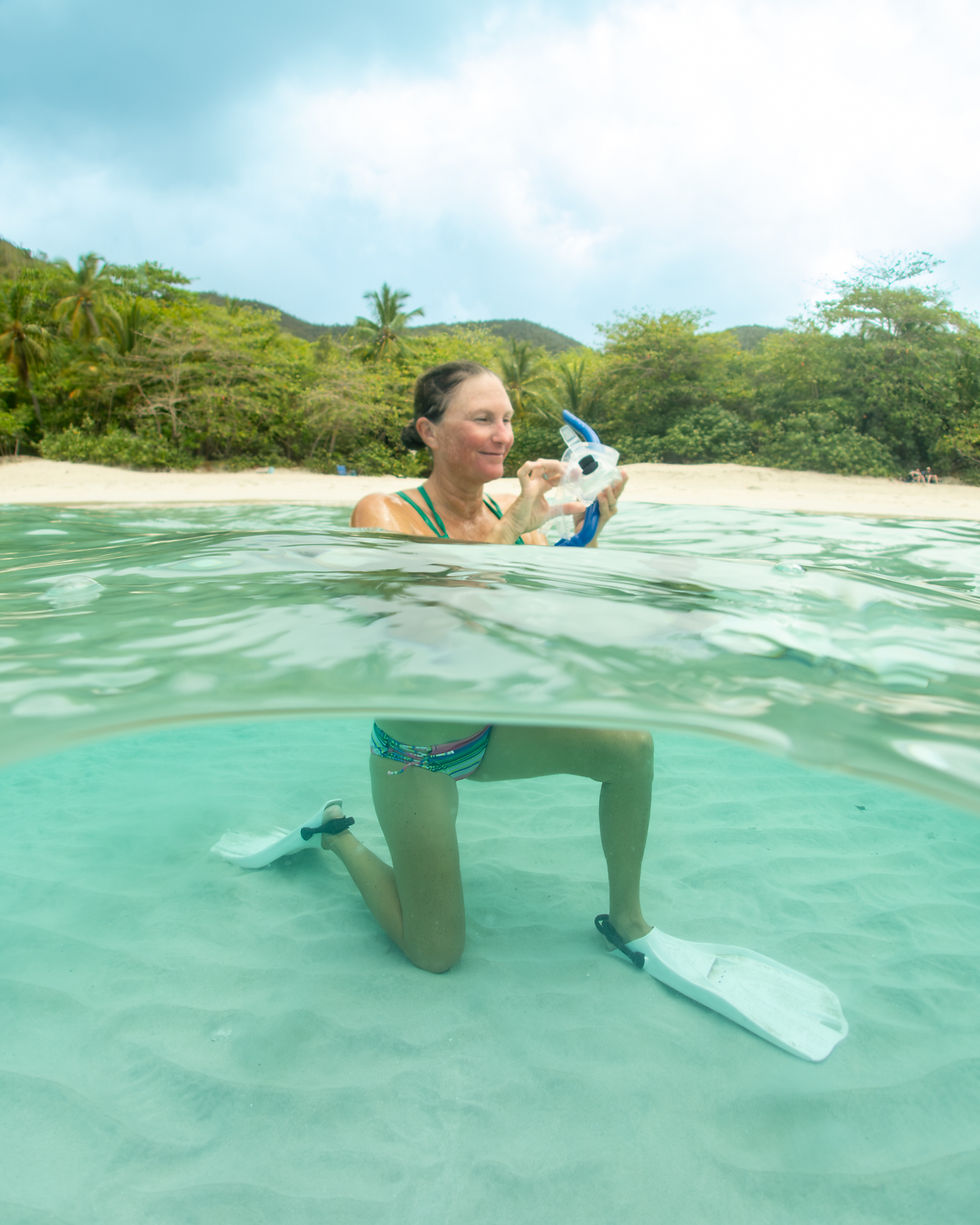
Saliva can act as a simple defogger by helping prevent condensation from forming those tiny vision-blocking droplets on the lens. Spit onto the inside of your mask lenses, rub it around with your finger, give the mask a quick rinse in seawater, put it back on, and keep swimming.
Spit is nature’s defog. It’s always with you, and it’s free.
If you’re comfortable clearing your mask without taking it completely off, another quick option is to let a little seawater inside, tip your face downward to rinse the lenses, and then clear the water from the mask. It may not work as well as actually re-defogging the lens, but it can give you a clearer view until you’re ready to stop and fix it properly.
Don't Let a Foggy Mask Make You Miss the Good Stuff
A snorkel mask is your window into the underwater Virgin Islands. You never know when a sea turtle will cruise through the seagrass, a parrotfish will munch its way across the reef, or something perfectly camouflaged will suddenly reveal itself below you.
On a private charter with Blue Water Charters, we provide adult snorkel gear and commercial defog and can help you get your mask fitted and ready before you jump in. Then all that’s left is to get in the water, look around, and see what the Virgin Islands have waiting beneath the surface.
Ready to see it for yourself? Get your BUM on a boat and come snorkeling with us.

📸 All photos courtesy of Sara and Lee Richter 📸


Comments