


Jellyfish in the Virgin Islands: A Local Guide to the Species You're Most Likely to See

Think all jellyfish are dangerous? Think again.

Every summer, we start seeing more jellyfish drifting through the crystal-clear waters of the U.S. and British Virgin Islands. For some visitors, that can be a little intimidating—especially if they spot a purple warning flag at a beach or hear someone mention a "sea wasp."
The good news? Most jellyfish you're likely to encounter while snorkeling in the Virgin Islands are harmless or only mildly irritating, and they certainly aren't out looking for swimmers. Understanding which species you're seeing (and what to do if you encounter one) can turn uncertainty into fascination and help you feel even more confident in the water.
Whether you're snorkeling over coral reefs, exploring seagrass flats, or relaxing at the beach, here's your guide to the jellyfish you're most likely to encounter in the Virgin Islands.
When Can You See Jellyfish in the Virgin Islands?
Jellyfish are most common in Virgin Islands waters during the warmer summer months, when changing currents can carry them closer to shore. Some years bring more sightings than others, but it's not unusual to encounter moon jellyfish, Caribbean box jellyfish, or even the occasional pink meanie while snorkeling. The good news? Most encounters are brief, and with a little awareness, they rarely interfere with enjoying the water.
The important thing to remember is that jellyfish are simply passing through. If you see one while snorkeling, don't panic. Give it a little space, let it drift by, and continue enjoying your snorkel.
Meet the Jellyfish You're Most Likely to Encounter
Moon Jellyfish
If you snorkel during the summer, this is the species you're most likely to see.
Moon jellyfish are large, nearly transparent, and easy to identify by the distinctive four horseshoe- or four-leaf clover-shaped reproductive organs visible through the center of the bell. They also have very short tentacles, meaning you generally have to get quite close—or actually brush against one—to receive a sting.
The good news is that their sting is extremely mild. Many people don't feel it at all, while others experience only slight irritation.
Good to know: Moon jellyfish are beautiful to observe and make wonderful photography subjects. Simply swim around them and let the current carry them on their way.

Caribbean Box Jellyfish (Sea Wasp)
While much less common than moon jellyfish, Caribbean box jellyfish occasionally appear during the summer months and are the reason beaches in the British Virgin Islands sometimes raise purple flags warning of dangerous marine life.
⚓ Captain's Tip: What Does a Purple Flag Mean? If you're visiting the British Virgin Islands, especially The Baths on Virgin Gorda, keep an eye out for a purple warning flag. It means potentially dangerous marine life has been observed in the area. During the summer months, that can include Caribbean box jellyfish (sea wasps). It doesn't necessarily mean the beach is closed—it simply means it's a good day to stay aware of your surroundings. |
Their transparent bodies make them difficult to spot, especially in bright sunlight, and their sting is significantly more painful than a moon jellyfish's.
Fortunately, encounters are uncommon, and these jellyfish are also drifting with the current rather than actively swimming toward people.
If you're stung and experience severe pain, difficulty breathing, dizziness, facial swelling, or other signs of an allergic reaction, seek medical attention immediately.

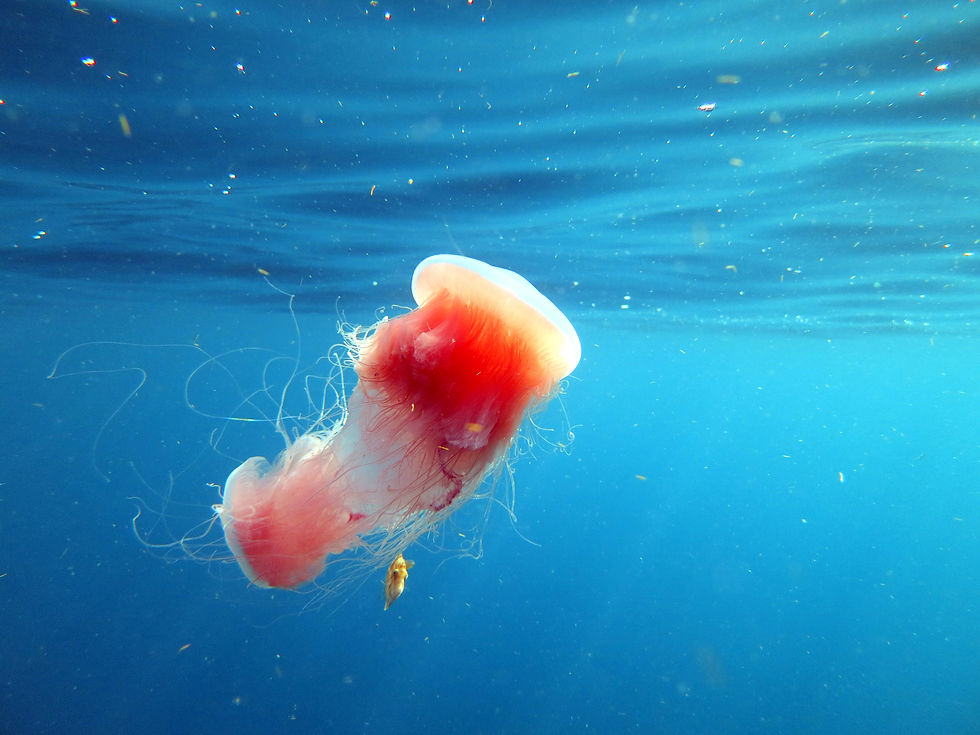
Pink Meanie Jellyfish
One of the most spectacular jellyfish found in Caribbean waters is the appropriately named pink meanie.
These large, vibrant pink jellyfish are specialized predators that feed almost exclusively on... other jellyfish—especially moon jellyfish.
Seeing one is uncommon and memorable, especially when moon jellyfish numbers are high.
They're fascinating to observe from a distance, but like all jellyfish, they should be admired without touching.
Upside-Down Jellyfish
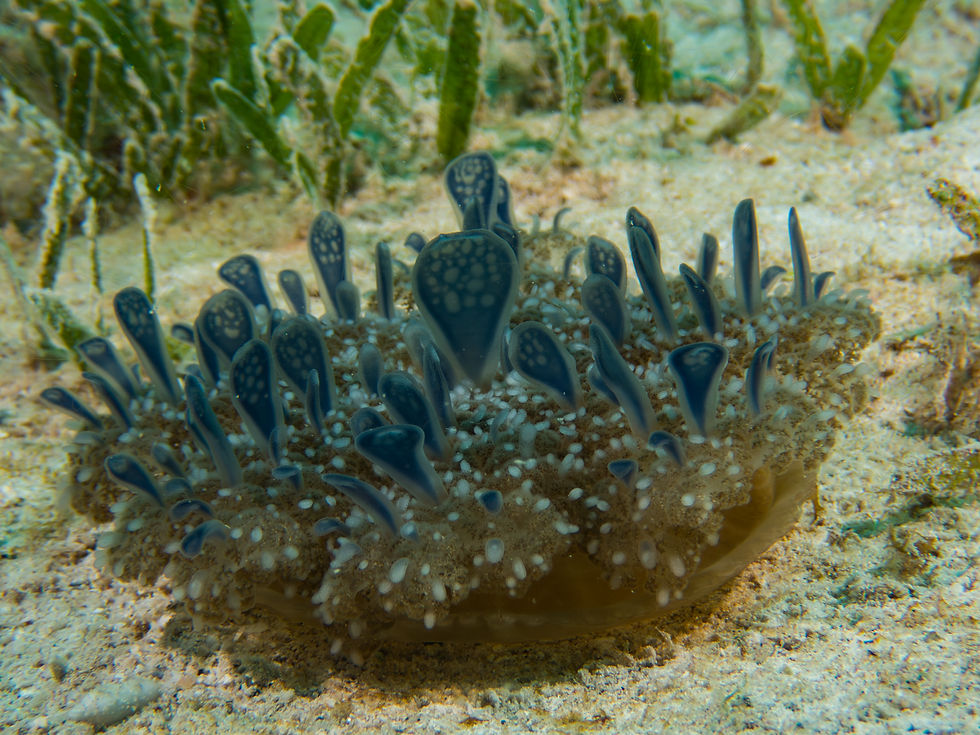
Unlike most jellyfish, upside-down jellyfish spend much of their lives resting on the seafloor in shallow, protected seagrass flats and mangrove lagoons.
Instead of floating through the water, they lie bell-down with their frilly arms pointed upward toward the sun. Like corals, they host symbiotic algae that help provide energy through photosynthesis.
These jellyfish deserve a little extra awareness while snorkeling.
When floating on the surface to adjust your mask, chat with friends, or rest, avoid absentmindedly sculling your fins over shallow seagrass. Besides stirring up sediment and reducing visibility, finning directly above upside-down jellyfish can disturb them and release microscopic stinging cells into the surrounding water.
A good snorkeling habit is to keep your fins up whenever you're floating over seagrass flats. It's better for the seagrass, better for visibility, and helps you avoid an itchy surprise. For most people, contact with upside-down jellyfish causes only mild skin irritation—more of an annoying itch than an "oh no!" moment—but it's still best to avoid disturbing them altogether.
Comb Jellies: The "Jellyfish" That Doesn't Sting
One of the most magical animals you'll encounter in Virgin Islands waters isn't actually a true jellyfish at all.
Comb jellies belong to the phylum Ctenophora, not Cnidaria, which means they don't have stinging cells. They're completely harmless to people.
Most are about the size and shape of an egg—or smaller—and drift through the water year-round. In sunlight, rows of tiny beating cilia create shimmering rainbow colors that look almost holographic underwater.
Because they don't have tentacles or stinging cells, comb jellies are perfectly safe to admire up close.

The animals above are the gelatinous drifters you're most likely to encounter while snorkeling in the Virgin Islands. Every now and then, though, the currents bring something unexpected. If you spot one you can't identify, enjoy the rare sighting—but admire it with your eyes, not your hands, and give it plenty of space. The ocean always has a few surprises in store.
What Are "Sea Lice"?
Despite the name, sea lice aren't actually lice.
The term usually refers to the microscopic larval stages of certain jellyfish or sea anemones. They're far too small to see, but occasionally they can become trapped beneath swimsuits or rash guards, causing itchy red bumps after swimming.
Not everyone reacts, and outbreaks vary throughout the year, but if you've ever heard someone say they were "bitten by sea lice," this is usually what they're mean.
What Should You Do If You're Stung?
Fortunately, most jellyfish stings in the Virgin Islands are mild.
For minor stings:
Exit the water if needed.
Rinse the area with seawater (avoid fresh water, which can trigger additional stinging cells to fire).
Vinegar may help neutralize unfired stinging cells from certain jellyfish species.
Apply an anti-itch cream or hydrocortisone if irritation develops.
An oral antihistamine, such as Benadryl®, may help reduce itching or mild allergic reactions.
Seek medical attention immediately if you experience:
Difficulty breathing
Facial or throat swelling
Severe or worsening pain
Dizziness or fainting
A widespread allergic reaction
Respect, Don't Fear
Jellyfish are an important part of the Caribbean marine ecosystem. Most are gentle drifters simply following the currents, and many are surprisingly beautiful to observe underwater.
Knowing which species you're looking at—and understanding which ones deserve a little extra space—allows you to snorkel with confidence instead of concern.
The next time you spot a moon jellyfish drifting by or a shimmering comb jelly catching the sunlight, take a moment to appreciate just how incredible these animals really are. Some of the most fascinating marine life in the Virgin Islands isn't hiding in the reef at all—it's floating quietly past.
Ready to experience the incredible marine life of the Virgin Islands for yourself? Join Blue Water Charters for a private snorkeling adventure and discover the reefs, seagrass flats, and crystal-clear waters where these fascinating creatures call home.

📸 All photos courtesy of Sara and Lee Richter 📸


Comments