


Why Are Caribbean Waters So Blue? The Science Behind Those Incredible Colors


The Caribbean is famous for its stunning shades of blue—but have you ever wondered why are Caribbean waters so blue?
The vibrant turquoise bays and deep sapphire channels aren't the result of photo editing or camera filters. They're created by a perfect combination of sunlight, exceptionally clear water, white sand, changing water depths, and what's hiding beneath the surface.
Once you understand the science, you'll never look at the ocean the same way again.
Why Are Caribbean Waters So Blue?
It all starts with sunlight.
Sunlight may look white, but it's actually made up of every color of the rainbow. As sunlight enters the ocean, water absorbs the longer wavelengths—reds, oranges, and yellows—much more quickly than blue light.
The remaining blue light penetrates deeper into the water and is scattered back toward our eyes, giving the ocean its characteristic blue color.
If that were the only factor, though, every ocean would look the same. The Caribbean's famous colors come from several other ingredients working together.

Crystal-Clear Water Makes Caribbean Blues Pop
One reason the Caribbean is so breathtaking is that the water is incredibly clear.
Unlike many coastlines, the Virgin Islands don't have large rivers constantly washing muddy sediment into the sea. Caribbean waters are also naturally low in nutrients, so there are fewer microscopic algae (phytoplankton) suspended in the water.
With fewer particles blocking the light, sunlight can penetrate much deeper, producing the crystal-clear water the islands are famous for.

Why Some Water Is Turquoise While Other Water Is Deep Blue
Water depth is one of the biggest reasons the ocean changes color.
In shallow water, sunlight reaches the bottom and reflects back through the clear water. Over bright white sand, that reflected light creates the brilliant turquoise color that makes Caribbean beaches so iconic.
As the water gets deeper, less sunlight reaches the seafloor. Without that reflected light, the water appears progressively darker, shifting from aqua to cobalt to deep sapphire.
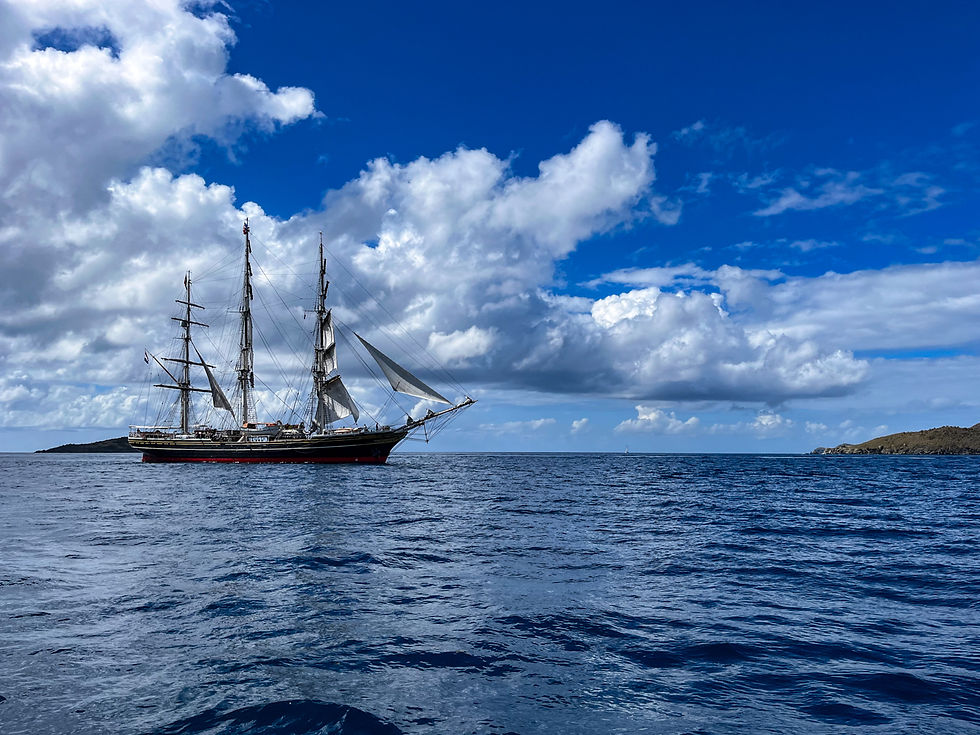
One of the best parts of exploring by boat is watching these colors change as you travel from one bay to the next.
What's on the Bottom Matters
The seafloor also plays a surprisingly important role.
White sand reflects lots of sunlight, creating bright turquoise water.
Seagrass often gives the water a soft emerald or jade-green tint.
Dark rock or coral absorbs more light, making the water appear darker.
Shallow reefs and rocky ledges can even make the water look brown from the surface.

That's where an old mariner's saying comes from:
"Brown, brown, run aground. Blue, blue, sail on through."
It's a simple reminder that brown patches often indicate shallow reefs or rocks, while darker blue water usually means it's safe to continue. Of course, experienced captains rely on charts, local knowledge, and depth sounders—not just water color—but it's a fun example of how the ocean's colors can reveal what's below.

Why the Same Bay Can Look Different Every Time You Visit
Have you ever noticed that the same beach looks completely different from one day to the next?
That's because water color is constantly changing based on:
The angle of the sun
Cloud cover
Wind and surface ripples
Water depth
What's on the seafloor
Calm conditions often make the water appear especially clear, revealing brilliant turquoise shallows. Wind creates ripples that change how light reflects from the surface, giving the same bay a completely different look.
Sandy Spit, four different days. The water itself hasn't changed, but lighting, weather, and surface Sandy Spit, four different days. The water itself hasn't changed, but lighting, weather, and surface Sandy Spit in the British Virgin Islands on 4 different days Sunlight, clouds, wind, and water clarity can transform the appearance of the same tiny island
Sandy Spit: The same place, four different looks. Sunlight, cloud cover, wind, and water conditions can dramatically change the color of Caribbean water—even at the exact same location.
Every Shade Tells a Story
One of the things that makes the Virgin Islands so spectacular is the incredible variety of underwater landscapes packed into a small area.
During a single day on the water, you might pass over white sand flats, colorful coral reefs, lush seagrass meadows, rocky shorelines, and deep channels. Each changes the way sunlight interacts with the water, creating a constantly shifting palette of turquoise, emerald, cobalt, and sapphire.
The next time you're out on the water, look closely. Every change in color is a clue about what's happening beneath the surface.

Frequently Asked Questions
Is Caribbean water naturally this blue?
Yes. The Caribbean's famous colors are completely natural. They're created by sunlight interacting with exceptionally clear water, varying depths, and different types of seafloor.
Why is Caribbean water turquoise instead of blue?
Turquoise water is usually found in shallow areas where sunlight reflects off bright white sand beneath the surface.
Why does some water look green?
Seagrass beds, algae, and certain bottom types can give the water an emerald or jade-green appearance.
Why does some water look brown?
Brown patches often indicate shallow rock, coral, or reef close to the surface. Mariners have long used the saying, "Brown, brown, run aground. Blue, blue, sail on through," as a reminder that changing water color can reveal underwater hazards.
Experience Every Shade of Caribbean Blue
Photos are beautiful, but nothing compares to seeing these colors in person. Whether you're snorkeling over a colorful coral reef, gliding across brilliant turquoise shallows, or cruising through deep sapphire channels, every stop offers a different perspective on the incredible waters of the Virgin Islands.
A private boat charter lets you experience these ever-changing colors up close—and once you've seen them for yourself, you'll understand why the Caribbean is unlike anywhere else in the world.
Ready to experience every shade of Caribbean blue? Compare our guide to USVI vs. BVI Boat Charters to decide where to explore first. When you're ready to see these incredible colors in person, book your private charter and discover the Virgin Islands from the best seat in the house.

📸 All photos courtesy of Sara and Lee Richter 📸


Comments