


How We Choose Snorkel Spots in the Virgin Islands: What Goes Into Every Charter Day


One of the first conversations we have after everyone settles aboard isn't, "Where are we going?"—it's "What would make today an amazing day for you?"
If we're staying in the U.S. Virgin Islands, one of my first questions is usually, "Where would you like to have lunch?" It might seem like a simple question, but it helps shape the entire day.
Want to grab tacos at Lime Out? Great! Since it's on the east side of St. John, we can often build an itinerary that circles the island with snorkel stops and beaches along the way.
Thinking about Pizza Pi? It's one of my favorite options, especially on windier days. While we may have a few minutes of waves getting there, Pizza Pi sits in the protected waters behind Great St. James. That itinerary pairs perfectly with cruising St. John's North Shore beaches, snorkeling with sea turtles, and enjoying a relaxing float in calm, crystal-clear water.
Visiting during hurricane season? Lime Out and Pizza Pi are typically closed from about August through mid-October, so Dinghy's Beach Bar on Water Island often becomes our go-to lunch stop when conditions allow. Outside of that season, Lovango Beach Club (typically open mid-December through mid-July) is another excellent option. Its location just off Cruz Bay lends itself to a similar itinerary as Pizza Pi, and it's a great choice if anyone in your group would appreciate getting off the boat for a while before continuing the day.
There isn't a "best" lunch stop—there's only the one that fits your perfect day.
On a British Virgin Islands charter, my biggest question is usually, "How important is snorkeling to your group?" If snorkeling is your top priority, that opens up a completely different set of possibilities than a day focused on beach bars, sightseeing, or simply relaxing in calm turquoise water.
Once I know what your perfect day looks like, I start putting together the puzzle. How we choose snorkel spots in the Virgin Islands isn't based on a fixed itinerary—it's based on your priorities, your group's comfort level, and the conditions we're given that day.
Before I even get to the boat, I've already checked wind forecasts, wave heights, tides, cruise ship schedules, and weather to build the best possible itinerary.
That's one of the biggest advantages of booking a private charter: flexibility. Instead of forcing the same route every day, we can adapt to the conditions and create the kind of day that simply isn't possible with a fixed itinerary.

How We Choose Snorkel Spots in the Virgin Islands Every Morning
No two days in the Virgin Islands are exactly alike.
A reef with crystal-clear water yesterday might be stirred up today. A calm bay could become exposed after a wind shift. A favorite beach might suddenly fill with cruise ship visitors.
Every morning, the goal is the same: Where will our guests have the best day possible today?
Here's what goes into that decision.
Wind: The Biggest Piece of the Puzzle
If there's one factor that influences almost everything else, it's the wind.
More wind generally means bigger waves, rougher boat rides, and lower underwater visibility as sand and sediment get stirred up. Fortunately, the Virgin Islands are full of islands, cays, and protected bays. By using the islands as natural windbreaks, we can often find calm water even when it's breezy elsewhere.
Sometimes moving just a few miles completely changes the experience.

Waves: Height Isn't the Whole Story
Many weather apps show wave height, but that's only part of the story.
Captains also pay attention to wave period (the time between waves) and wave direction. Two days with the exact same forecasted wave height can feel completely different depending on where those waves are coming from and how frequently they arrive.
A famous snorkel site can be spectacular one day and feel like a washing machine the next.

Currents: The Invisible Force
Currents are one of the biggest things guests don't notice—but captains absolutely do.
Before the trip, we check the tide tables and note the moon phase. Around the new and full moon, larger tidal swings create stronger currents throughout the islands.
Once we're on the water, we're constantly looking for clues.
A painter line attached to a mooring drifting upwind? That's a good indication the current is stronger than the wind.
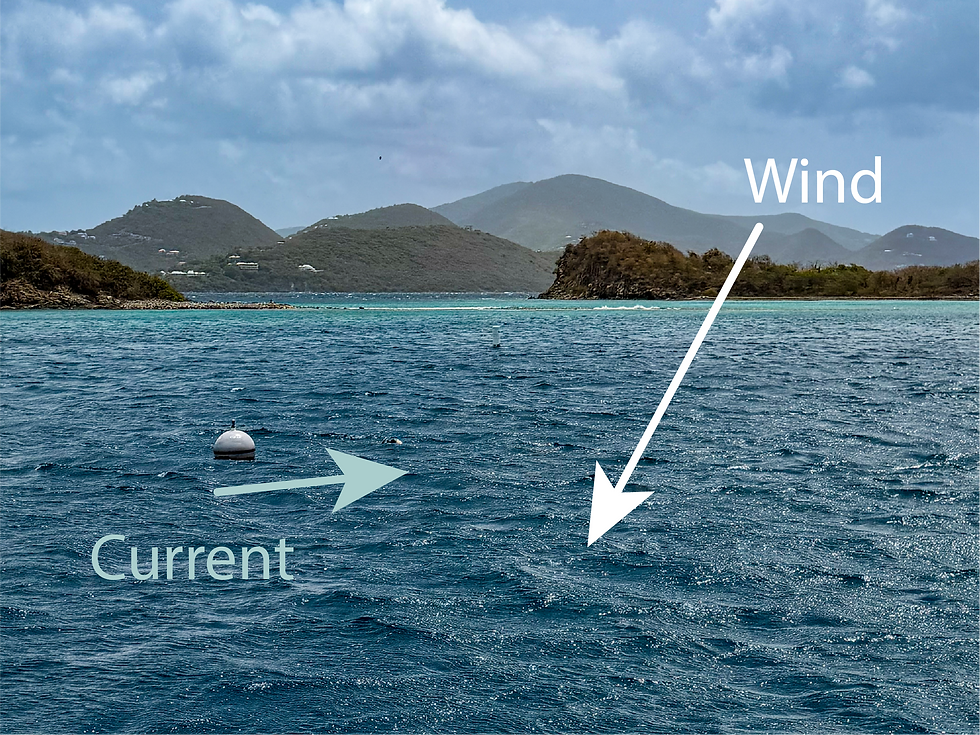
As we pass through island cuts, we watch how the water behaves. If one side of the cut looks noticeably choppier than the other, that's usually water funneling quickly through the passage.
These little observations help us choose snorkel sites that are safer, more comfortable, and more enjoyable.
Visibility: We Chase the Clearest Water
Everyone dreams of that postcard-perfect Caribbean water.
Wind and waves can stir up sand in shallow areas, reducing visibility even when the sun is shining.
That's why we'll often head to the lee side of an island where calmer conditions allow the water to clear. Better visibility doesn't just make for prettier photos—it makes snorkeling more enjoyable because you'll simply see more marine life.
Sometimes the difference between a good snorkel and an unforgettable one is choosing the protected side of the island.

Crowds Matter Too
Finding beautiful places is only part of the equation.
Finding them when they're quiet is just as important.

If we pull up to a snorkel stop and there's already a large excursion boat there, we'll usually move on and come back later—or choose another beautiful reef instead.

The same goes for popular spots like Lime Out. Arriving before 11:00 a.m. or after about 1:00 p.m. often means a much more relaxed experience.
One of the biggest advantages of a private charter is that we're free to adjust throughout the day.
Cruise Ships Can Change the Plan
Cruise ship schedules have a surprising impact on some of the Virgin Islands' most popular destinations.
When several ships are in St. Thomas, beaches like Trunk Bay and Honeymoon Beach often become much busier.
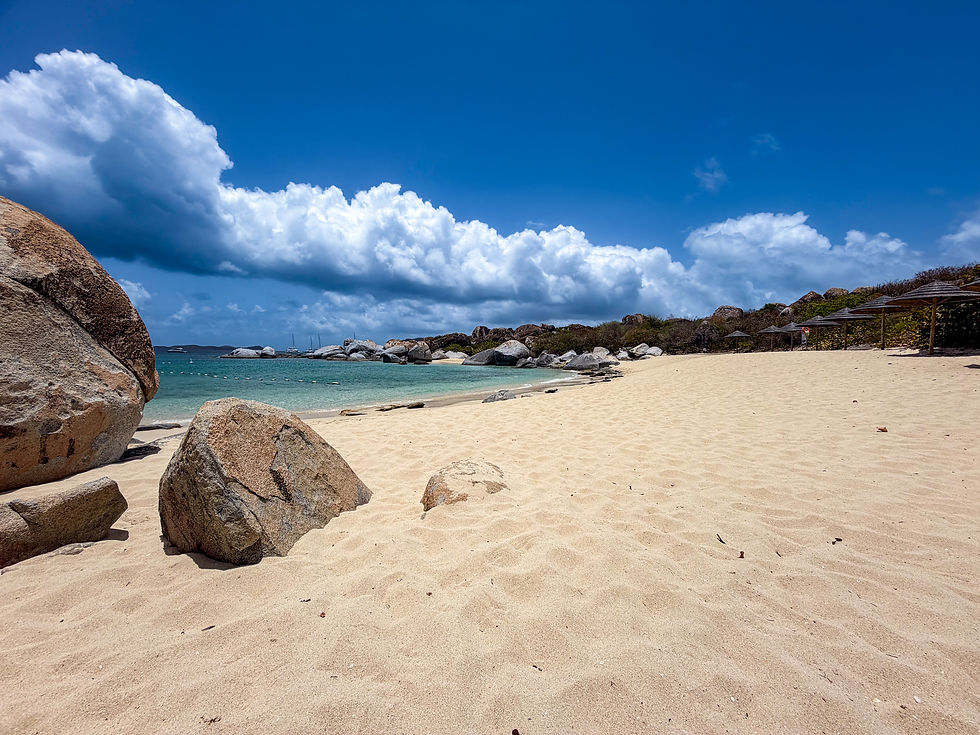
Cruise ships visiting Tortola can have the same effect on The Baths, Cane Garden Bay, and The Soggy Dollar Bar.
We don't just look at how many ships are in port—we look at when they're leaving. If a ship sails around 2:00 p.m., visiting The Baths a little later can mean far fewer people. If ships remain in port until evening, it may be worth choosing another destination entirely.
Sometimes avoiding the crowds makes for the better day.
Weather Doesn't Always Mean Cancelling
One of the biggest misconceptions about boating is that rain ruins the trip.
In the Virgin Islands, that's rarely the case.
Most showers are brief and isolated. We can often see them coming and simply adjust course or wait a few minutes while they pass.
If the weather system has an actual name, though, that's a different story. Tropical storms and hurricanes are taken seriously. Safety always comes first, the boat comes out of the water, and trips are rescheduled.
What About the Tides?
Unlike many boating destinations, tides in the Virgin Islands usually don't determine whether we can access a location.
What they do affect is current.
Areas around Waterlemon Cay, Henley Cay, and other narrow passages can experience noticeably stronger current depending on the stage of the tide, which is another reason we pay close attention to the tide before every trip.
The Best Thing You Can Tell Your Captain

One of the nicest things guests say is: "Take us wherever you'd like to go."
While we truly appreciate the trust, it actually doesn't give us much to work with.
My perfect day on the water might involve snorkeling all day long. Yours might include spotting a sea turtle, relaxing on a quiet beach, floating in calm turquoise water, and enjoying lunch at a beach bar.
The most helpful thing you can tell your captain is what your highlight reel looks like.
For example: "We'd love to do two snorkel stops, spend a little time on a beach, and hopefully see a sea turtle."
That's perfect.

Now we can take your wish list, combine it with your group's swimming and snorkeling ability, today's conditions, and our local knowledge to create the best possible itinerary.
That's the real advantage of a private charter.
Don't Chase Someone Else's Instagram Itinerary
Social media is a fantastic source of inspiration—but it doesn't tell you what today's conditions look like.
Take The Baths, for example. They're one of the most spectacular destinations in the British Virgin Islands, but they're also one of the most weather-dependent. Since they're almost due east of St. John, getting there often means running directly into the prevailing trade winds and waves.
If there's more north or south in the wind, we can often use Tortola as a natural shield for much of the ride, making the trip much more comfortable.
The destination hasn't changed.
The conditions have.
The same idea applies to famous snorkel sites like The Indians. On the right day, they're absolutely incredible. On the wrong day, surge and wave action can turn them into a washing machine.
Sometimes the best snorkeling of your vacation happens somewhere you've never heard of—simply because that's where the conditions are best that day.
Every Day Is Different—and That's the Fun of It
One of the best parts of exploring the Virgin Islands by boat is that no two days are ever exactly the same.
Every morning brings a different combination of wind, waves, currents, visibility, weather, and crowds. Piecing those factors together is part science, part experience, and part local knowledge gained from spending countless days on these waters.
The result isn't a one-size-fits-all itinerary—it's a day that's built around your priorities and the best conditions nature has to offer.

If you're looking for a day that's tailored to your interests, your comfort level, and the best conditions on the water, a private charter with Blue Water Charters is the perfect way to experience the Virgin Islands at their very best.


Comments