


Why Do Parrotfish Poop Sand? You’ll Never Look at Caribbean Sand the Same Way Again


Picture yourself on a gorgeous Caribbean beach: turquoise water, warm sunshine, and soft white sand between your toes.
Now consider this:
Some of that beautiful sand may have passed through a fish.
Yep. A fish.
So, why do parrotfish poop sand? It all starts with what these colorful reef fish eat—and the surprisingly important job they do while munching their way across Caribbean coral reefs.
Once you know the story, you really may never look at that powdery tropical sand the same way again.
Why Do Parrotfish Poop Sand?
Parrotfish get their name from their unusual teeth, which are fused together to form a strong, beak-like structure. If you've ever snorkeled near a feeding parrotfish in the Virgin Islands, you may have even heard them at work.
Crunch. Scrape. Crunch.
Parrotfish graze on algae growing across the reef. But they don't simply pluck algae from the surface—their powerful beaks scrape or bite into the calcium-carbonate reef beneath it, taking tiny bits of reef material along with their meal.
Inside the fish, that hard material is ground into much smaller particles. The nutritious stuff gets digested.
The rest?
Well...it has to come out somewhere.
The fine calcium-carbonate material eventually exits the parrotfish as—you guessed it—sand.
Basically, Parrotfish Are Tiny Underwater Sand Factories
They aren't trying to make sand. They're just trying to eat lunch.
The sand is a pretty fantastic side effect.
Depending on the species, size, diet, and location, individual parrotfish can produce a surprising amount of sediment over time. Grain by grain, that material becomes part of the constantly changing Caribbean marine environment.
Parrotfish Are Also the Reef's Lawn Crew
The sand-making part gets all the attention—because, obviously, fish poop—but what parrotfish are doing before that is even more important.
As parrotfish graze, they're removing algae from reef surfaces.
Think of them as colorful little lawnmowers cruising around the reef all day.

Keeping algae in check is important because too much algae can compete with corals for space and light. By keeping fast-growing algae in check, parrotfish can reduce competition for space and light, helping create conditions where corals can thrive.
So when you see a parrotfish busily scraping away, you're not just watching a pretty Caribbean fish having lunch. You're watching one of the many ecological processes happening on the reef right in front of you.
And you're witnessing the beginning of the world's strangest sand-making process.
So...Are Caribbean Beaches Really Made of Parrotfish Poop?
Here's where the story gets exaggerated a little.
Not every grain of white Caribbean sand came out of a parrotfish.

Tropical beach sand can be a mixture of materials, including calcium-carbonate fragments from coral skeletons, shells, and other marine organisms. Some sand also contains silica, the quartz-based mineral that makes up much of the sand on beaches around the world. The exact mix varies from beach to beach.
But parrotfish really can contribute fine sediment to tropical marine environments through their feeding and digestion.
So is all that gorgeous white sand between your toes parrotfish poop?
No.
Has some tropical sand actually traveled through the digestive system of a parrotfish?
Absolutely.
We'll give you a minute to reconsider every Caribbean beach vacation you've ever taken.
Listen for Parrotfish While Snorkeling in the Virgin Islands
Here's the really fun part: you don't have to be a marine biologist to catch parrotfish in action.
The next time you're snorkeling around St. John or elsewhere in the Virgin Islands, slow down for a moment and listen.
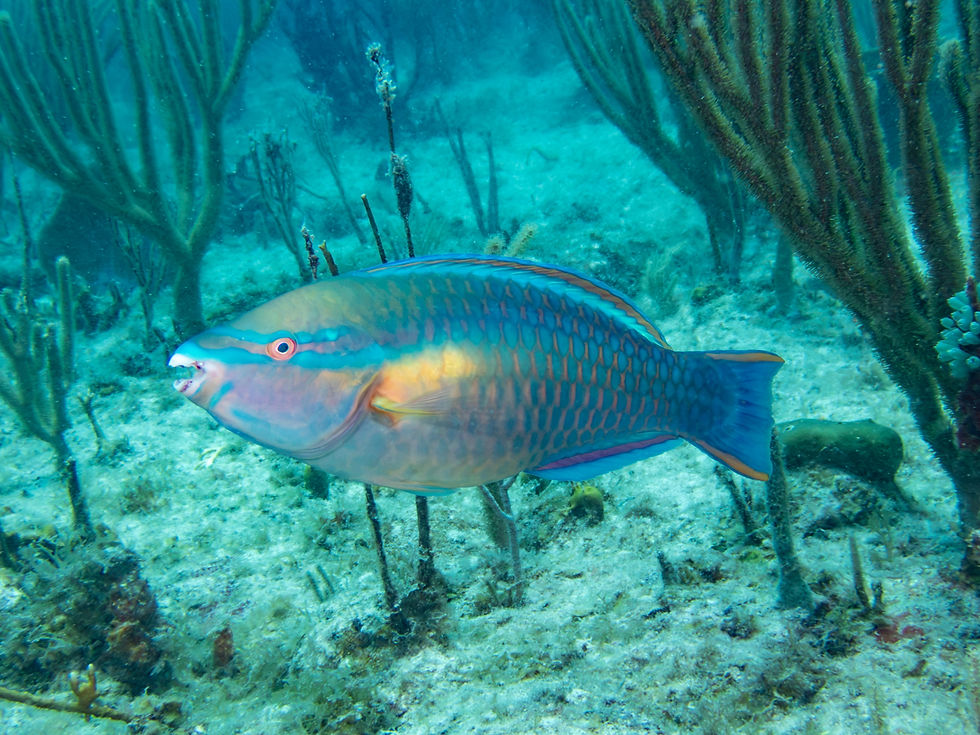
Seriously—listen underwater.
If a parrotfish is feeding nearby, you may hear that unmistakable scraping and crunching sound as its beak works across the reef.
Then watch for a little cloud trailing behind it.
Congratulations. You may have just witnessed tomorrow's sand being made.
The reefs of the Virgin Islands become even more fascinating when you slow down and notice the little things happening beneath the surface. Come explore them with Blue Water Charters, listen for those reef-crunching parrotfish, and discover what else is hiding beneath that ridiculously blue water. Book your private Virgin Islands boat charter and come see the reef in action for yourself.
📸 All photos courtesy of Sara and Lee Richter 📸


Comments